
Used Vehicle Checklist PDF: What to Print and Bring
Print one used vehicle checklist, a one-page inspection sheet, and bring a flashlight, tire gauge, OBD-II scanner, and phone charger. If you cannot inspect a cold start, reschedule. Skip the kit, and you can miss rust, tire wear, warning lights, or title problems that cost money after you buy. This guide shows what to print, what to pack, and how to use each item at a dealer lot or private sale.
What this printable checklist includes
This kit is built for a fast vehicle inspection. Keep it to one page, leave space for notes, and use a simple pass/fail mark so you can compare vehicles without relying on memory.
Truck buyer kit
| Section | What to print | How to use it |
|---|---|---|
| Print Before You Go | Checklist, seller questions, VIN/log sheet | Carry on paper so you can mark answers at the truck |
| Bring in Your Bag | Flashlight, OBD-II scanner, tire gauge, gloves, notepad, pen | Use during the inspection and test drive |
| Record While Inspecting | VIN, tire tread readings, fluid notes, rust locations, warning lights, test-drive observations | Write down facts while you can still see them |
| Compare Trucks | Up to three trucks with pass/fail marks | Use the same criteria for every vehicle |
What should you print before you go?
Print a one-page inspection checklist, a seller question sheet, a VIN and notes log, and a comparison grid for up to three vehicles. That gives you enough structure to inspect quickly, record evidence, and compare vehicles after the visit without rewriting your notes later.
Print these pages
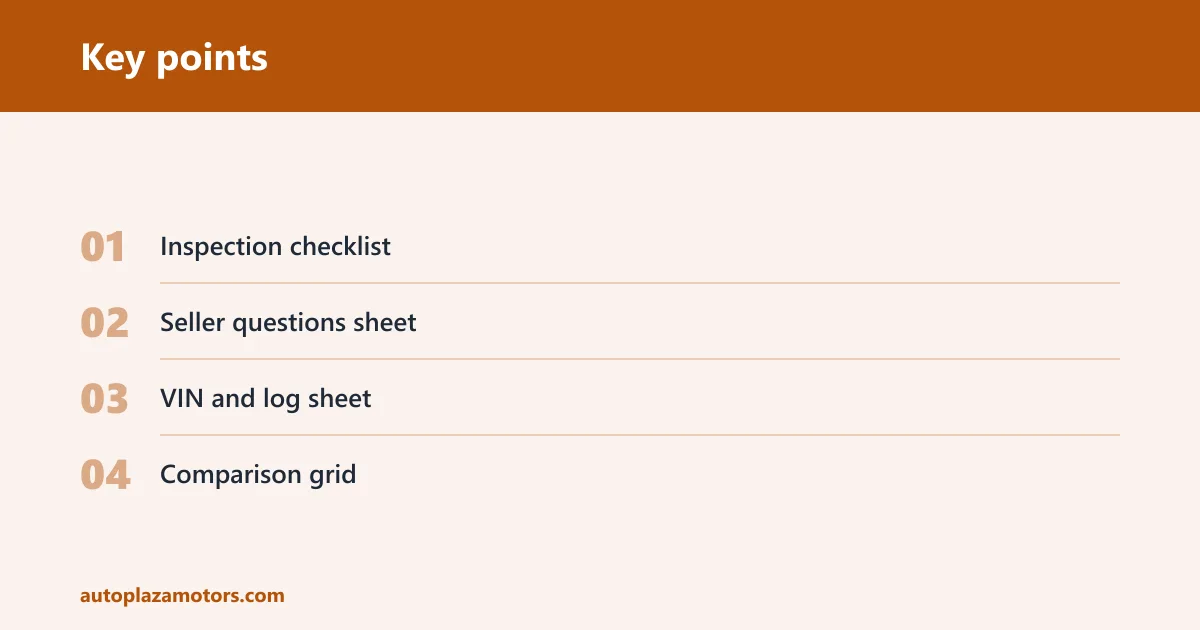
- Inspection checklist: exterior, interior, engine bay, tires, frame, and documents.
- Seller questions sheet: service records, repairs, accident history, flood exposure, tow use, and warning lights.
- VIN and log sheet: VIN, title status, mileage, tire readings, leaks, rust notes, and scan results.
- Comparison grid: space for up to three vehicles and a pass/fail column.
What the one-page checklist should contain
The printed checklist should use checkboxes, short labels, and blank lines for notes. Keep sections for body panels, glass, lights, interior controls, engine fluids, tire condition, frame rails, underbody, and documents. A one-page format works better in a lot or driveway than a long multi-page packet.
Comparison grid for three trucks
| Item | Truck 1 | Truck 2 | Truck 3 | Pass/Fail |
|---|---|---|---|---|
| VIN match | Pass / Fail | |||
| Title and seller ID match | Pass / Fail | |||
| Warning lights and scan results | Pass / Fail | |||
| Tire wear and tread depth | Pass / Fail | |||
| Rust, leaks, and underbody condition | Pass / Fail | |||
| Maintenance records | Pass / Fail |
What should I bring in my bag?
Bring a high-lumen LED flashlight, an OBD-II scanner, a tire tread depth gauge, gloves, a notepad, and a pen. Add a phone charger so you can keep notes, photos, and any history report handy during a longer appointment. If the vehicle is dirty or wet, gloves help you inspect without guessing.
How to use each item
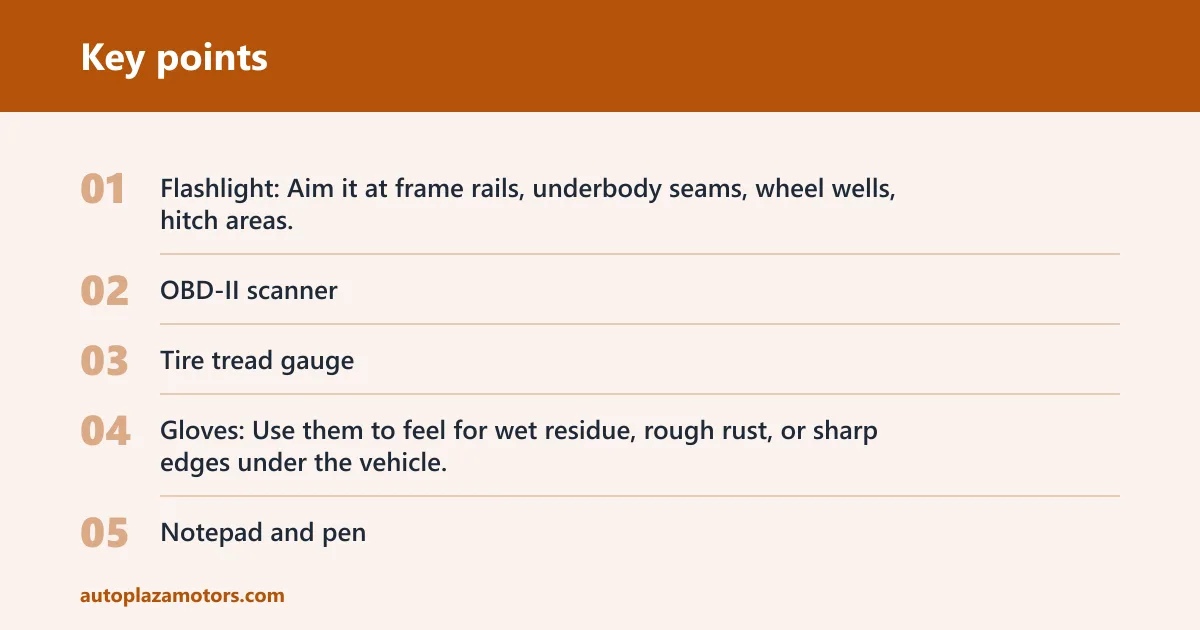
- Flashlight: Aim it at frame rails, underbody seams, wheel wells, hitch areas, bed floor corners, and fluid stains.
- OBD-II scanner: Read stored and pending codes on 1996-and-newer vehicles to check warning lights and emissions faults.
- Tire tread gauge: Measure tread in 32nds of an inch and compare all four tires for uneven wear.
- Gloves: Use them to feel for wet residue, rough rust, or sharp edges under the vehicle.
- Notepad and pen: Record VIN, mileage, tire readings, rust spots, leaks, and test-drive notes as you go.
Why these items matter
The flashlight finds things you miss in shade. The scanner can confirm whether a warning light is recent or part of a stored fault history. The tread gauge helps you spot alignment or suspension issues through uneven wear. A magnet or paint-thickness reading can help flag filler or repaired panels, but it should never replace a visual inspection.
How do you use the checklist on the lot?
Start with the VIN and paperwork, then move through the body, engine bay, tires, frame, and test drive in the same order every time. That keeps the inspection consistent and helps you compare vehicles fairly when one has more visible wear than the others.
Step-by-step inspection flow
- Match the VIN on the dash, door jamb, title, and paperwork.
- Check the seller’s ID against the title or bill of sale.
- Walk around the body and note dents, paint mismatch, gaps, bed damage, and hitch abuse.
- Open the hood and check oil, coolant, and visible leaks.
- Inspect frame rails, underbody, wheel wells, and rust-prone spots with the flashlight.
- Measure tire tread and look for uneven wear, curb rash, or mismatched sizes.
- Scan for codes and note any warning lights before the drive.
- Test drive on city streets, highway speeds, braking, parking, and reverse.
Picture a crew cab with a clean body and a rough rear bumper. If the hitch area shows bent metal, fresh scratches, or rust around the receiver, treat that as a clue to tow abuse and inspect the frame and suspension more closely.
Used truck checklist PDF
Exterior and body checks
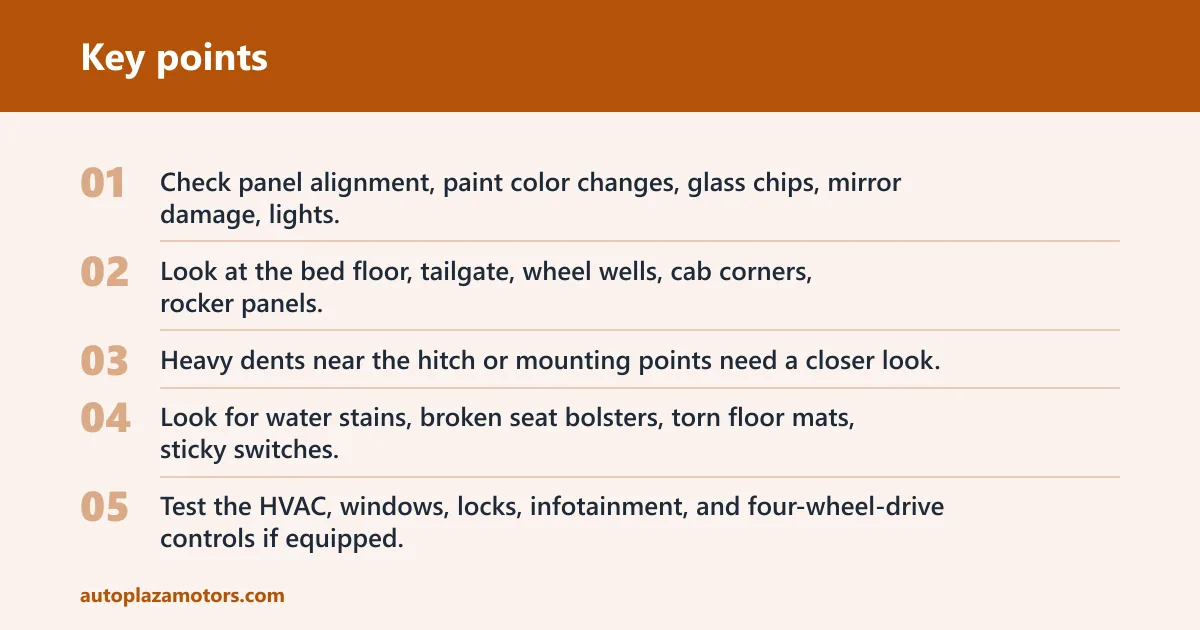
Check panel alignment, paint color changes, glass chips, mirror damage, lights, and door operation. Look at the bed floor, tailgate, wheel wells, cab corners, rocker panels, and around the hitch. Heavy dents near the hitch or mounting points need a closer look.
Interior and controls checks
Look for water stains, broken seat bolsters, torn floor mats, sticky switches, cracked trim, and damaged pedals. Test the HVAC, windows, locks, infotainment, and four-wheel-drive controls if equipped. Strong odors can point to moisture, smoke, or mildew, which deserve more questions before you move forward.
Engine bay and fluid checks
Check the oil level and color, coolant condition, and signs of fresh residue near hoses, the valve cover, radiator, transmission pan, and transfer case. Look for wet spots under the vehicle after it has been parked. Fresh drips matter more than old dust, because they point to an active leak.
Tires, frame, and underbody
Measure tread depth in 32nds of an inch and compare side-to-side wear. Uneven inner or outer wear can point to alignment, suspension, or steering issues. Check the DOT date code, matching tire sizes, wheel condition, and curb rash. Underneath, inspect frame rails, crossmembers, and rust-prone seams for scaling, holes, or repairs.
Suppose one front tire reads noticeably lower tread than the others and the steering wheel sits off-center on the test drive. That combination can point to alignment or suspension trouble, so it should go into your notes before you decide whether to continue.
What should I ask the seller before the test drive?
Ask for service records, repair history, accident history, flood exposure, title status, and whether the vehicle was used for towing or heavy payloads. Also ask whether the check-engine light has been on, whether any warning lights were reset recently, and whether any 4×4 or differential repairs were done.
Documents and history questions
- Do you have maintenance records with oil-change intervals and major repairs?
- Is the title clear, salvage, rebuilt, or branded in any way?
- Can you show the registration, bill of sale, and lien release if needed?
- How many owners has the vehicle had?
- Has it ever been in a flood, collision, or frame repair?
Tow use and modification questions
Ask whether the vehicle pulled trailers, carried plows, or hauled heavy loads. Tow use can show up in worn hitch hardware, sagging rear suspension, heat marks, or uneven brake wear. Also ask about lift kits, oversized tires, and aftermarket wiring, since those changes can affect drivability and inspection results.
What should make you pause or walk away?
Stop the inspection if the VIN does not match the dash, door jamb, title, or paperwork. Pause if the scanner shows stored codes that the seller cannot explain, if warning lights stay on, or if the vehicle lacks basic records. Heavy rust, active leaks, and uneven tire wear can also justify walking away.
Failure-case workflow
- Write down the issue before the seller changes the story.
- Take a photo of the VIN plate, warning light, leak, or rust area if allowed.
- Ask for the missing document or explanation once.
- If the answer does not line up with the evidence, stop the deal.
- Move to the next vehicle and keep your comparison grid intact.
A common first-timer mistake is to accept a vehicle with a “small” oil leak because the rest of the body looks clean. If the leak is fresh and the frame rail below it is oily, note it as an active issue, not a cosmetic one.
Frequently asked questions
What should I print and bring when buying a used truck?
Print a one-page inspection checklist, a seller question sheet, a VIN and notes log, and a comparison grid for up to three vehicles. Bring a flashlight, OBD-II scanner, tire gauge, gloves, notepad, pen, and phone charger. That setup covers the inspection, records, and side-by-side comparison.
Is there a used vehicle inspection checklist PDF I can take with me?
Yes. A good PDF should fit on one page, use checkboxes, leave space for notes, and separate what you print from what you carry. Look for sections on exterior, interior, engine bay, tires, frame, and documents, plus a simple pass/fail line for each vehicle.
What should I check on a used truck before I buy it?
Check the VIN, title, seller ID, service records, warning lights, fluid leaks, tire wear, frame rust, bed damage, hitch area, and 4×4 operation if equipped. Then test drive on city streets, highway speeds, braking, parking, and reverse. Record every issue before you talk price.
What documents do I need to bring to inspect a used truck?
Bring the printed checklist, seller question sheet, VIN log, and comparison grid. If you are the buyer, also bring your driver’s license and any payment method needed for a deposit. For the seller side, ask to see the title, registration, bill of sale, and lien release if there is one.
Should I bring a flashlight or OBD2 scanner when checking a used truck?
Bring both if possible. The flashlight helps you inspect frame rails, wheel wells, underbody seams, bed corners, and fluid leaks. The OBD-II scanner reads stored and pending codes on 1996-and-newer vehicles, which helps you verify warning lights and emissions faults before you commit.
How do I use a printable checklist during a used truck inspection?
Use the checklist in the same order every time: identity, body, engine bay, tires, frame, documents, then test drive. Mark pass, fail, or note beside each item as you inspect it. That approach keeps the visit short, limits missed details, and gives you clean notes for comparing vehicles later.
