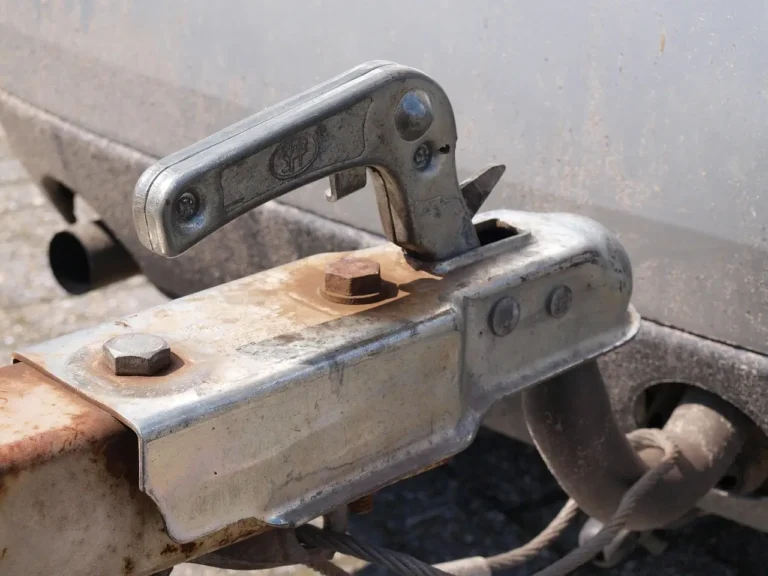
Do I Need a Weight Distribution Hitch for My Trailer?

You need a weight distribution hitch when trailer tongue weight goes past your vehicle or receiver’s weight-carrying limit; Many setups are commonly considered for weight distribution at around 500 pounds of tongue weight. Skip it, and you can get sag, vague steering, longer stopping distances, and extra stress on the hitch and frame. This guide explains when you need one, when you should use one, and when you can skip it.
Do you need one?
The short answer is yes when the loaded trailer puts more tongue weight on the hitch than the tow vehicle or receiver can carry without load transfer. It can also help when the trailer stays within limits but the rear of the tow vehicle squats, the steering feels light, or the owner’s manual calls for one. You can usually skip it on light bumper-pull trailers that stay within the receiver’s weight-carrying rating and keep the front axle planted.
A weight distribution hitch shifts some tongue load from the rear axle toward the tow vehicle’s front axle. Steering and braking depend on front-axle load. It may also be paired with sway control, but sway control does not replace correct tongue weight or correct loading.
When the trailer weight and tongue weight point to a yes
If the trailer is loaded near its GVWR, tongue weight often rises enough to make weight distribution a practical need. A travel trailer may place about 15% of its weight on the hitch, so a loaded trailer near 7,000 pounds can put roughly 1,050 pounds on the ball before cargo shifts or water adds more load. That can exceed a standard receiver’s weight-carrying limit quickly.
Use actual loaded weight, not brochure weight alone. GVWR tells you the maximum allowable loaded trailer weight, including trailer, cargo, and installed equipment. Tongue weight is the downward force on the hitch ball, and it is usually expressed as a percentage of trailer weight. That percentage changes with cargo placement, water, propane, and stored gear.
When the hitch is helpful but not mandatory
Some rigs sit in the middle. The trailer may stay under both GVWR and the receiver’s weight-carrying rating, yet the tow vehicle still squats enough to soften steering feel. In that case, a weight distribution hitch is often the right fix because it restores more normal front-axle load and can improve the stance of the truck or SUV.
That does not mean every trailer needs one. A lighter bumper-pull trailer with a modest tongue weight and no front-axle lightness may tow fine with a standard hitch. The decision should come from ratings and symptoms together, not from trailer type alone.
When you can usually skip weight distribution
You can usually skip it when the trailer’s loaded weight is modest, tongue weight stays within the receiver’s weight-carrying limit, and the tow vehicle keeps firm steering and normal brake feel after hitching. If the owner’s manual does not require weight distribution for your exact trailer weight, and the loaded setup stays stable, a regular hitch can be enough.
Do not use a bigger hitch to mask a bad load. If cargo sits too far rearward or water tanks change weight by hundreds of pounds, the real issue may be loading, not hitch capacity.
Tongue weight and ratings
Tongue weight is the first number to check because it drives the need for load transfer. If the tongue load is too high for the receiver’s weight-carrying mode, a weight distribution hitch becomes the right tool. If the tongue load is too low, no hitch setup will fully cure sway or poor tracking.
Compare three things: the trailer’s actual loaded weight, the tongue weight, and the tow vehicle’s and receiver’s ratings. GVWR sets the trailer ceiling. GAWR sets the axle ceiling, and that can limit the setup even when GVWR is not exceeded.
Why GVWR and actual loaded weight both matter
GVWR gives you the legal and mechanical ceiling for the trailer as loaded. Actual loaded weight tells you what the trailer really weighs today, with water, food, tools, bikes, and supplies on board. A hitch choice based only on a brochure weight can miss the real tongue load by a wide margin.
That is where many setup errors begin. A trailer that looked light on paper can become a much heavier hitch load once tanks are full and storage bins are packed. Fresh water tank changes can matter by over 400 pounds, which is enough to change both tongue weight and axle loading.
How GAWR can change the answer
GAWR matters because each axle has its own limit, even if the trailer still sits below GVWR. Too much rearward loading can overload the trailer axle. Too much forward loading can overload the tongue and front structure. A setup can be legal by GVWR and still be wrong by axle ratings.
On the tow vehicle, GAWR helps determine whether the front axle can recover enough load after hitching. If the front wheels become lighter without weight distribution, steering and braking stability suffer. A proper setup moves some load back forward so the front axle is not starved.
Check the loaded numbers. Weigh the trailer when it is packed for travel, then compare that value with GVWR and the trailer axle ratings. That tells you whether the problem is true overloading or just a hitch setup issue.
Measure tongue weight. Use a tongue-weight scale or a known axle-scale method and compare the result with the receiver’s rating in weight-carrying and weight-distributing modes. The rating gap is often the deciding line.
Inspect front-axle response. Hitch the trailer and look for front-end lightness, vague steering, or longer stopping feel. If the front axle unloads too much, weight distribution is usually the correct fix.
Do I need a weight distribution hitch for a travel trailer?
Many bumper-pull travel trailers benefit from one, but not every travel trailer needs it. The loaded weight, tongue weight, and tow vehicle behavior after hitching tell you the answer. A travel trailer with stable loading and a modest tongue load can be fine without one. A heavier trailer with noticeable rear squat usually should have one.
Most travel trailers are fairly heavy, and many put about 15% of their weight on the hitch. That is why travel trailers so often cross the line into weight-distribution territory. The question is not “travel trailer or not.” It is “how much load is on the ball, and what does that do to the tow vehicle?”
Bumper-pull travel trailers with noticeable rear squat
Rear squat is one of the clearest signs that the setup needs more than a standard hitch. If the rear of the tow vehicle drops, the headlights aim higher, and the steering feels lighter, the hitch is carrying too much tongue load in weight-carrying mode. A weight distribution hitch can move some of that load forward again.
Say your SUV drops noticeably after you hitch a 28-foot travel trailer, and the steering feels vague on a straight road. If the tongue weight is within the trailer’s limits but above the receiver’s weight-carrying rating, the answer is usually to use weight distribution, not to guess at a stiffer shock or a random spring swap.
Light trailers that still tow poorly because of loading
A lighter travel trailer can still tow badly if the cargo is placed wrong. Heavy items stored far behind the axle raise the sway risk, while too much gear forward can push tongue weight too high. The hitch may be doing its job and still not fix the trailer because the load is wrong.
That is why loading checks matter before buying hardware. Move heavy items low and near the axle area. The 60/40 guideline is a starting point for conventional trailers, but actual balance should be verified with tongue weight and axle load, not guessed from floor space.
When factory limits or the owner’s manual set the rule
Some tow vehicles and receivers require weight distribution above a certain trailer weight or tongue weight. In those cases, the manual decides the answer, even if the rig feels manageable without it. That is a rating issue, not a comfort issue.
Check the hitch label and the tow vehicle manual before towing. If the manual says weight distribution is required for a trailer above a given weight, follow that limit. It protects the receiver, the frame attachment points, and the suspension geometry.
How loading changes the answer
Loading can turn a marginal setup into a safe one, or a safe one into a poor one. Front-to-back balance changes tongue weight. Side-to-side balance changes axle load and can create uneven tracking. Heavy items should sit low and near the axle area so the trailer stays predictable.
Sway control helps with lateral movement, but it does not correct a trailer that is loaded wrong. If the tongue is too light, the trailer can still wander. If the rear is too heavy, no sway bar will fully replace proper load placement.
Front-to-back balance and tongue weight
Too little tongue weight is a common cause of sway. Too much tongue weight can overload the hitch and take weight off the tow vehicle’s front axle. Both problems start with cargo placement. The right fix is usually moving cargo, water, or batteries, not changing hitch size first.
A common first-timer mistake is loading a trailer so the rear storage bay is packed with the heaviest gear. That can make the trailer feel loose at highway speed even though the total weight looks fine on paper. Move some mass forward and recheck tongue weight before changing hardware.
Side-to-side balance and axle load
Uneven side-to-side loading can make one tire or one axle work harder than the other. That matters even if GVWR is still under the limit. It can also make the trailer lean, which changes how the spring bars and brackets sit during setup.
GAWR is part of this check because one axle can be overloaded before the trailer as a whole reaches GVWR. If one side is packed with tools, water jugs, or spare parts, the axle and tire load can be wrong even when the hitch itself is correctly sized.
Heavy items, water, and cargo shift
Water and cargo changes can move the answer from “maybe” to “yes.” Fresh water in a front tank, fuel, bicycles, and stored gear can shift the balance enough to change tongue weight by a large amount. That is why a setup that worked on one trip may need adjustment on the next.
B&W notes that its Continuum is meant to help equalize weight between the tow vehicle and trailer and can accommodate changing trailer loads without difficult adjustment or component changes. That kind of flexibility matters when the load changes often, but it still depends on correct setup and proper ratings.
Weight distribution hitch decision matrix
This matrix gives a quick yes/no path. Start with the loaded trailer weight, then check tongue weight and tow-vehicle symptoms. If the symptoms point to loading mistakes, fix those first. If the trailer is within load balance but still overloads the hitch or lightens the front axle, use weight distribution.
| Trailer weight situation | Tow-vehicle symptoms | Likely cause | Recommended action |
|---|---|---|---|
| Loaded trailer is near GVWR and tongue weight exceeds the receiver’s weight-carrying limit | Rear squat, light steering, front end feels less planted | True weight-transfer need | Use a weight distribution hitch with the correct rating |
| Trailer stays under GVWR, but tongue weight is in the 12% to 15% range and the front axle feels light | Steering is vague after hitching | Front-axle unload from tongue load | Use weight distribution and verify setup height |
| Trailer weight is moderate, but cargo sits far behind the axle | Sway, porpoising, unstable lane changes | Bad loading, not hitch shortage | Repack cargo before buying a heavier hitch |
| Trailer is light, tongue weight stays within the receiver’s weight-carrying rating, and the front axle stays planted | Normal steering and braking feel | No clear weight-transfer need | Skip weight distribution unless the manual requires it |
| Lifted truck or unusual hitch height changes the head angle and bracket fit | Setup sits nose-up or bars angle poorly | Geometry mismatch | Choose the correct shank, bracket position, and spring-bar rating |
| Load changes often, including water tank swings and moving cargo | Setup feels different from trip to trip | Variable trailer load | Pick a system that can be adjusted correctly for the new load |
What looks like a hitch problem but is not
Some symptoms point to cargo placement or tongue weight, not hitch size. If the trailer sways because the rear is heavy, a weight distribution hitch may improve the feel but will not solve the root issue. If the front axle is light because the ball load is too high, the load must be corrected before anything else.
Common failure signs from bad cargo placement
- Trailer sway starts after adding gear to the rear storage area.
- Brake feel changes after a tank fills, especially if the tank sits forward or aft of the axle group.
- One tire or one side of the trailer looks more compressed than the other.
- The trailer tracks better after moving heavy items low and near the axle area.
Signs the trailer is carrying too little tongue weight
Too little tongue weight often shows up as sway at highway speed, trailer steering inputs that feel delayed, and a rear end that seems to push the tow vehicle. A hitch cannot fully cure that if the trailer load is biased too far aft. Move cargo forward and retest before assuming the hitch is undersized.
When the tow vehicle setup or suspension changes the feel
Lifting the tow vehicle, changing tire size, or altering suspension height can change hitch geometry. CURT notes shank options for more drop on lifted trucks and offers a 2-1/2″ shank for Commercial Duty class 5 trailer hitches. CURT also sells spring bar brackets for larger trailer frames and replacement hardware, which matters when the existing hardware no longer fits the new stance.
Measure hitch height. Record the receiver height and the coupler height before choosing parts. That tells you whether you need more drop, a different shank, or a different bracket position.
Check bar and frame fit. Match the spring bars to the trailer frame and the hitch rating. Wrong bar size or bracket fit can make the setup behave poorly even when the trailer weight is acceptable.
Recheck after loading changes. Any change in cargo, water, or installed equipment can alter tongue weight. If the setup changes, adjust the hitch again before the next trip.
Frequently asked questions
Do I need a weight distribution hitch for my trailer?
You need one when the loaded trailer’s tongue weight exceeds your receiver’s weight-carrying limit or when the tow vehicle’s front axle becomes too light after hitching. If the trailer stays within limits and the steering and braking feel normal, you can often skip it. Ratings and symptoms should make the call.
How do I know if my trailer is too heavy for a regular hitch?
Compare the loaded trailer weight and tongue weight with the receiver label and the owner’s manual. If the tongue load is above the weight-carrying rating, a regular hitch is no longer enough. Rear squat, front-end lightness, and longer stopping feel are strong clues that you need weight distribution.
What tongue weight means I should use a weight distribution hitch?
There is no single number for every rig, but many setups cross into weight distribution around 500 pounds of tongue weight. Some vehicles require it at a lower point, and some can carry more. Use the exact receiver and vehicle ratings first, then judge the tow feel and front-axle recovery.
Can a weight distribution hitch help if my tow vehicle feels light in front?
Yes. That symptom often means the rear axle is carrying too much of the tongue load and the front axle has lost too much weight. A properly set hitch moves some of that load forward again, which helps steering and braking stability. If cargo is badly placed, fix that too.
Does a weight distribution hitch reduce trailer sway?
It can help reduce sway when the sway comes from weight transfer and poor front-to-back balance, but it is not a cure for bad loading. Sway control may be built into the hitch or added separately. It works alongside correct tongue weight; it does not replace it.
How do I tell whether my trailer loading is the real problem instead of the hitch?
Look for changes that happen after cargo moves, tanks fill, or heavy items are stored too far rearward. If the trailer improves when you move weight low and near the axle area, loading was the problem. If the front axle still feels light after proper loading, then the hitch setup is likely the issue.